01 — SELECTED PROJECT
Food Safety & Traceability System
An AI-assisted service design exploring food transparency from kitchen to doorstep.
- DESIGN & STRATEGY
- User Research
- System Design
- Service Design
- Business Model Design
- TECHNOLOGY & PROTOTYPING
- Machine Learning
- Computer Vision
- Hardware Prototyping
- OpenCV / Caffe
- VISUAL & INTERACTION
- Icon Design
- Information Architecture
- UI/UX Design
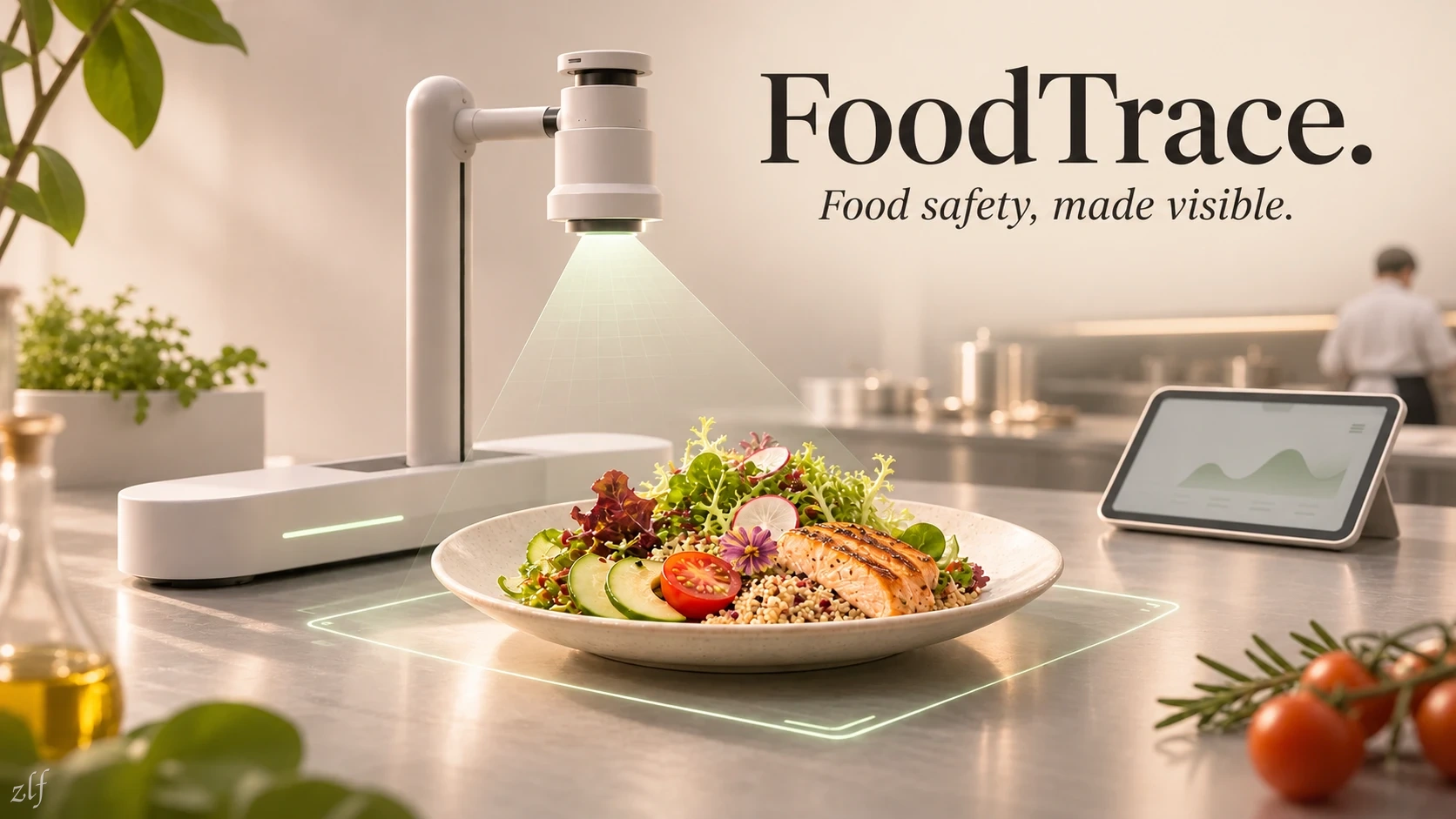
01 / FoodTrace
Beyond the Plate.
Behind every takeaway order is a complex process of preparation, cooking, packaging and delivery. Yet much of this journey remains invisible to consumers.
Original project survey
70%+of respondents prioritized food safety transparency.
- Taste
- 59.63%
- Price
- 44.04%
- Food safety
- 40.37%
- Brand
- 32.11%
- Nutrition
- 24.77%
- Reviews
- 17.43%
- Other
- 0.92%
Research insight
Customers wanted to see how their food was handled.
- Ingredient sourcing and storage
- Kitchen hygiene and preparation
- Packaging and delivery handoff
I reviewed takeaway platforms and the Sunshine Kitchen concept to explore how kitchens could share these records with customers.
02 / FoodTrace
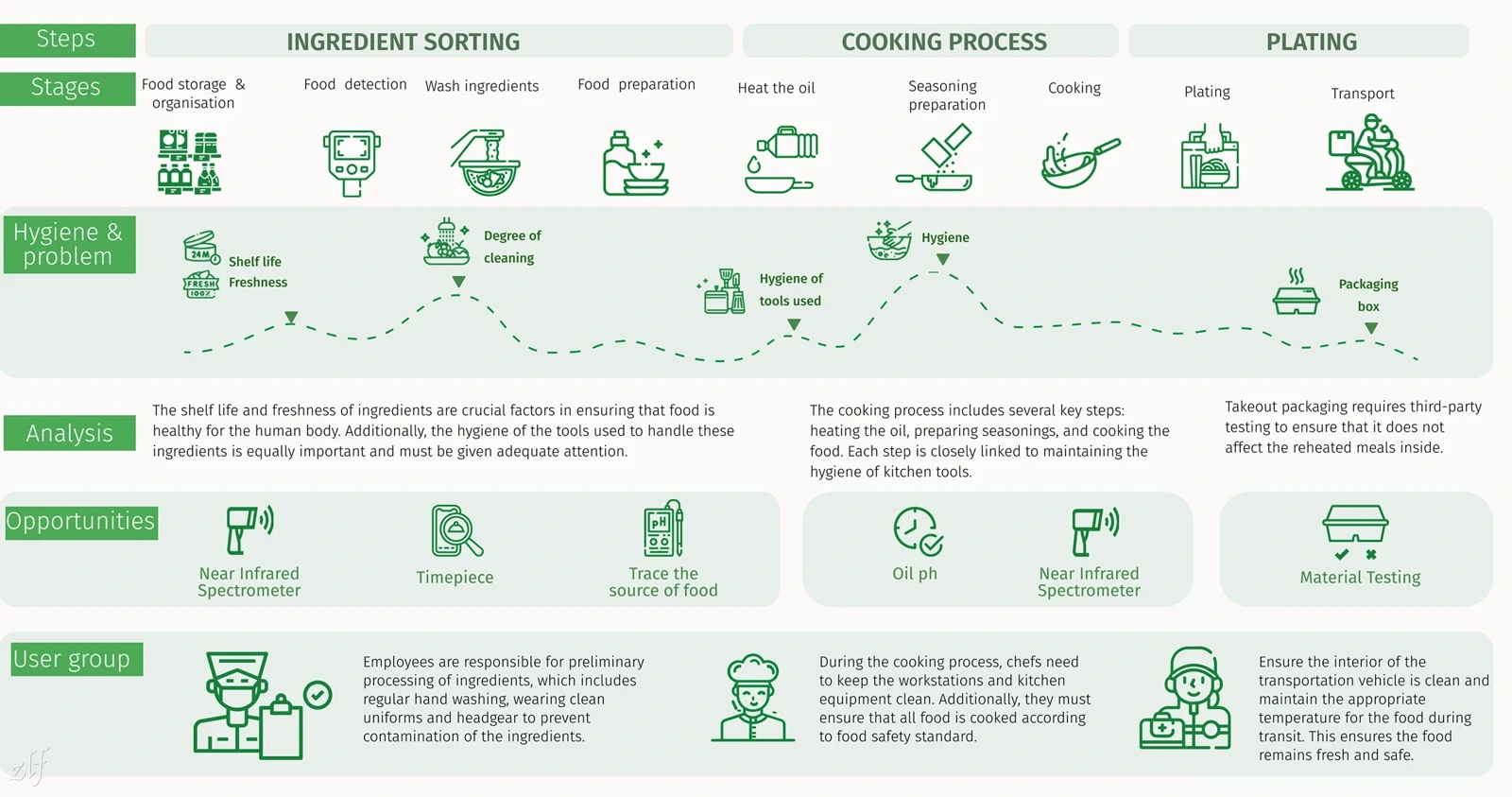
Mapping the Invisible Journey.
Mapping the takeaway workflow to identify hygiene risks, information gaps and opportunities for intervention.
Ingredient Sorting
 Ingredient storage
 Ingredient inspection
 Washing ingredients
 Food preparation
Cooking Process
 Heating oil
 Preparing seasoning
 Cooking
Plating
 Plating
 Transport
- Hygiene risks
- Storage, ingredient cleaning, utensils and packaging.
- Design opportunities
- Record checkpoints and make those records available at handoff.
- User groups
- Kitchen staff, restaurant operators, supply-chain teams and takeaway customers.
View original user analysis
03 / FoodTrace
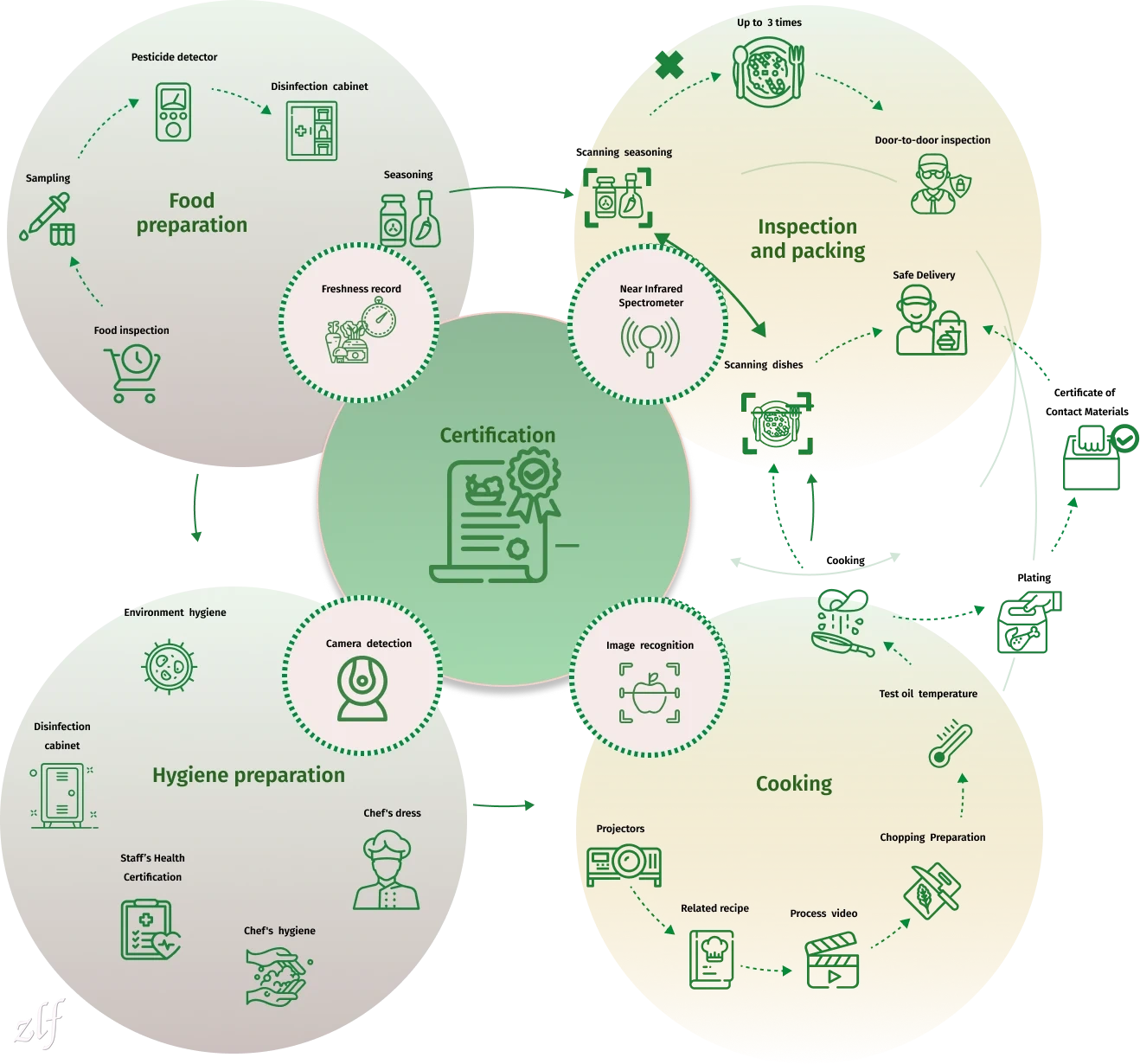
A System Built Around Trust.
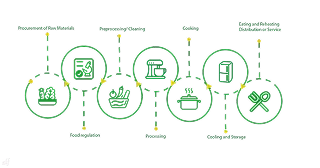
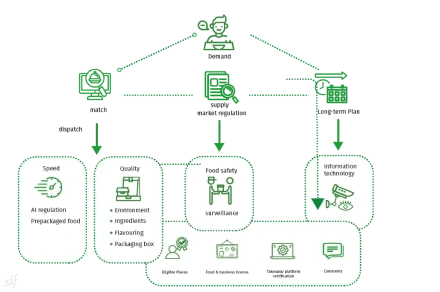
I designed the service system and mapped how preparation, inspection records and delivery handoffs connect.
Food Preparation
Organize ingredients and associate them with the order.
Hygiene Preparation
Document cleaning and preparation checkpoints.
Cooking
Record key steps for later review.
Inspection & Packaging
Associate review records with the packaged meal.
Certification & Traceability
Connect inspection records and delivery handoff in a traceable history.
04 / FoodTrace
A Visual Language Built from Scratch
I drew each icon in Adobe Illustrator and built a cohesive visual language for food safety actions, workflows, and system interactions.
05 / FoodTrace
Making Complexity Understandable.
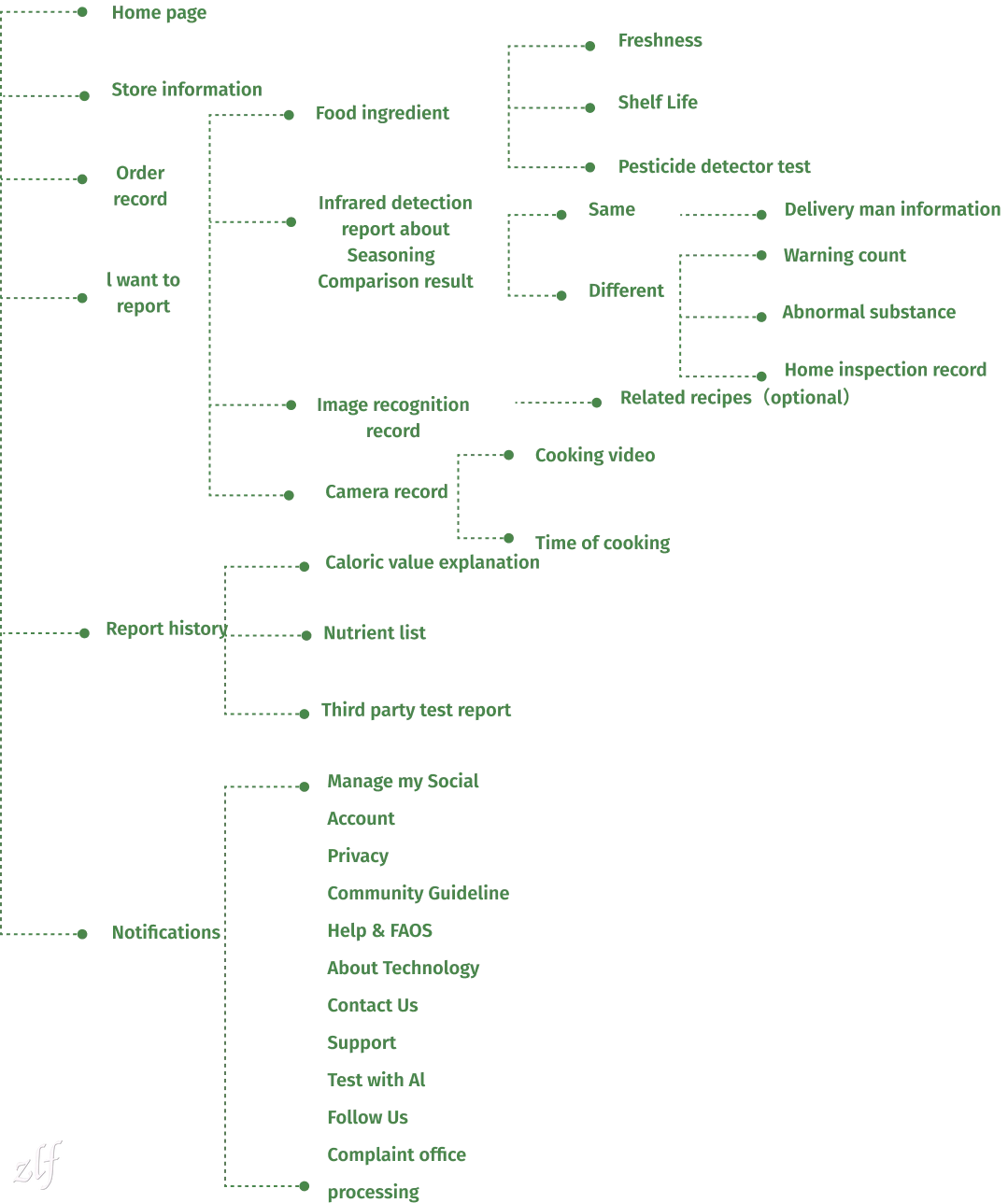
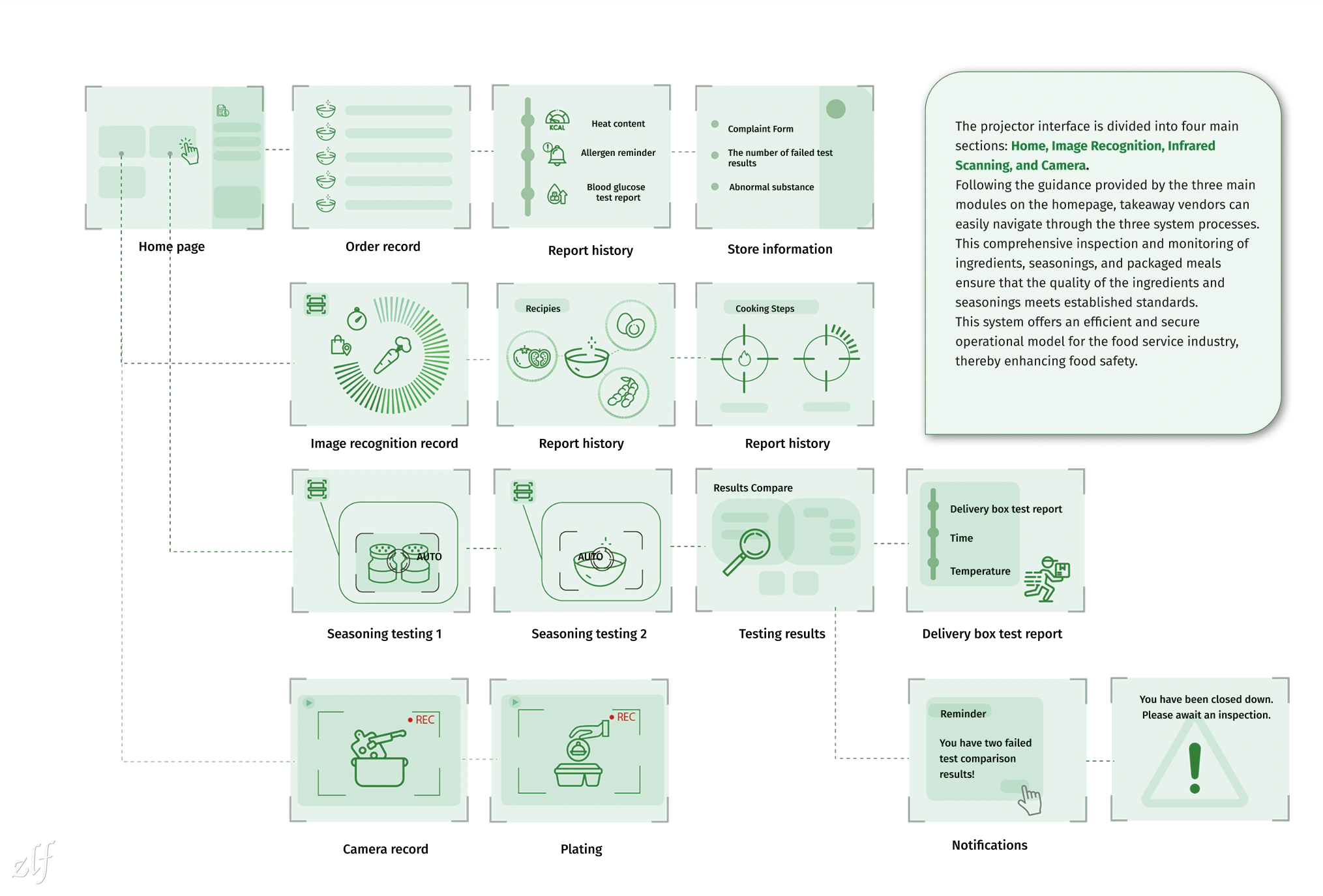
I designed the information architecture for browsing orders, inspection records and alerts.
- Home
- Orders, report history and store information
- Image recognition
- Ingredient records and preparation steps
- Infrared scanning
- Test comparison, packaging report and review notifications
- Camera
- Cooking and plating records
Original architecture and projector interface
06 / Prototype & Machine Learning
The Intelligence Behind the System
I built a working camera-based computer vision prototype and used the recorded scenarios to test how clearly people could follow the workflow.
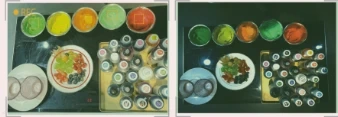
Camera frames recorded for ingredient detection and tracking.
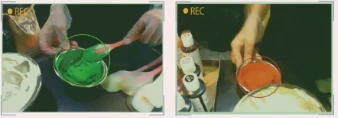
Preparation footage used to illustrate the proposed recognition workflow.
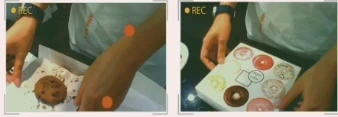
Packaging footage used to illustrate the proposed handoff checkpoint.
Prototype implementation
From camera input to detection
OpenCV · Caffe · TensorFlow · PID Control
The OpenCV DNN pipeline preprocesses frames, runs inference and draws detection boxes. The source also documents PID control for a two-axis servo that follows the detected target.
detections = net.forward()View original code and test notes
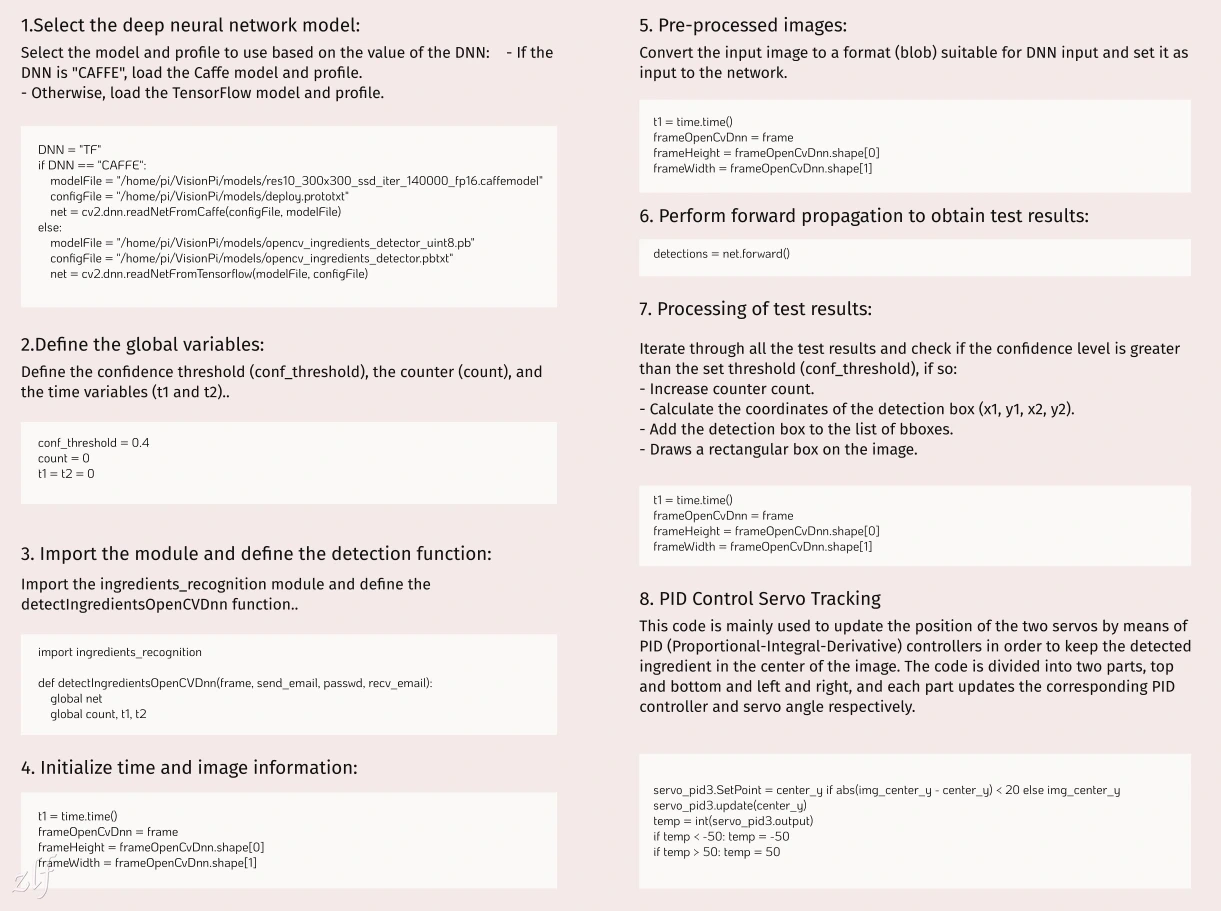
Usability testing focused on whether users could follow the stages and understand the next step. The study did not establish detection accuracy, validate food safety outcomes, or confirm automated recognition across every stage.
06A / Business Strategy
Designing for a Sustainable Business
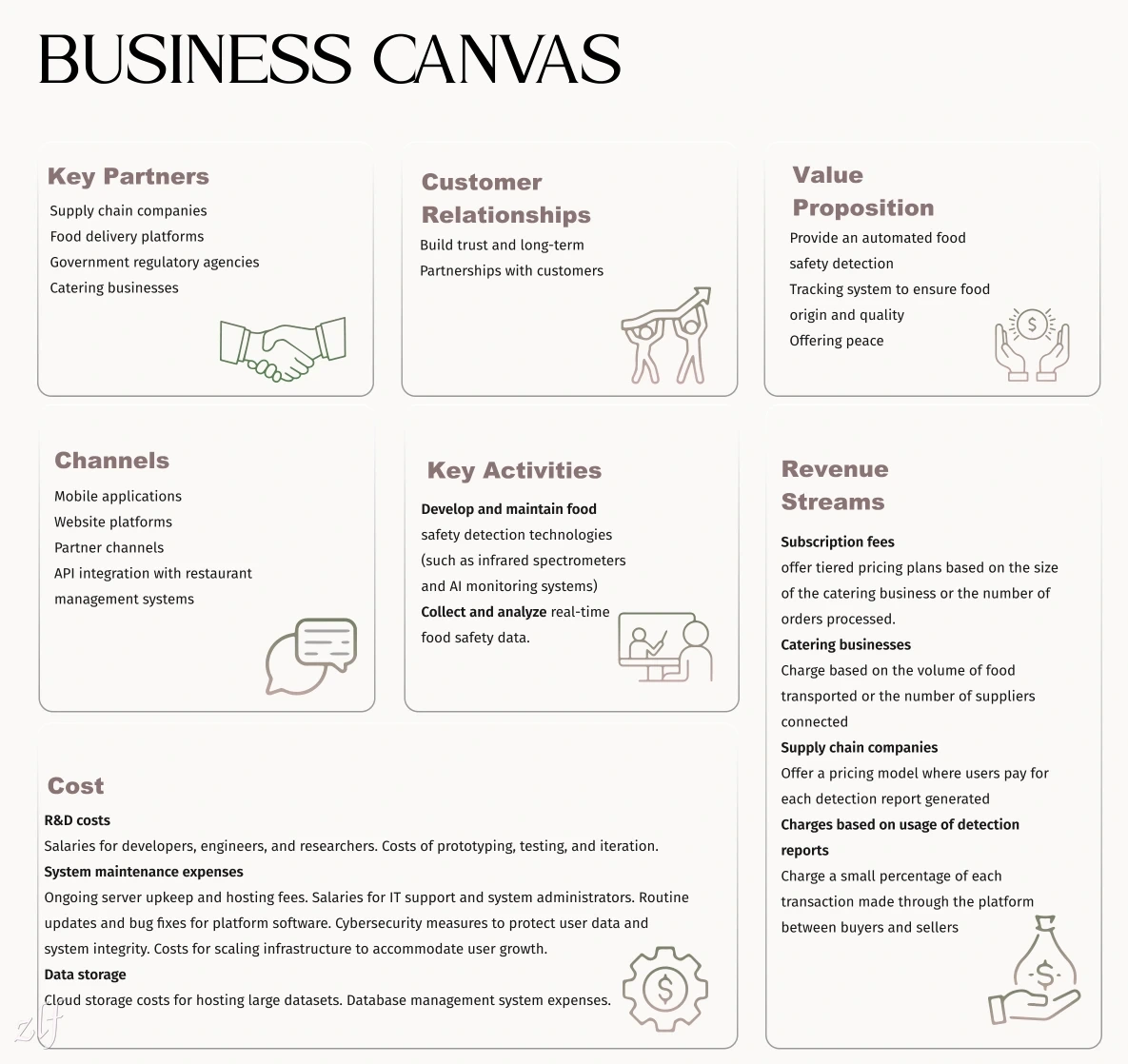
The original Business Canvas explores how restaurants, supply chains, and delivery platforms could support a traceable takeaway service.
- Stakeholders
- Restaurants and supply-chain companies as potential customers. Delivery platforms, suppliers and regulators as ecosystem partners.
- Value & distribution
- Give buyers a clearer view of food origin and handling through apps, web portals, partner channels and restaurant system integrations.
- Revenue options
- Explore tiered restaurant subscriptions, volume-based supply-chain fees, per-report pricing and transaction fees.
- Operating costs
- Account for research, prototyping and testing, infrastructure maintenance, and data storage.
These are business model hypotheses from the original project, with pricing and adoption still to be tested.
View original Business Canvas
07 / FoodTrace
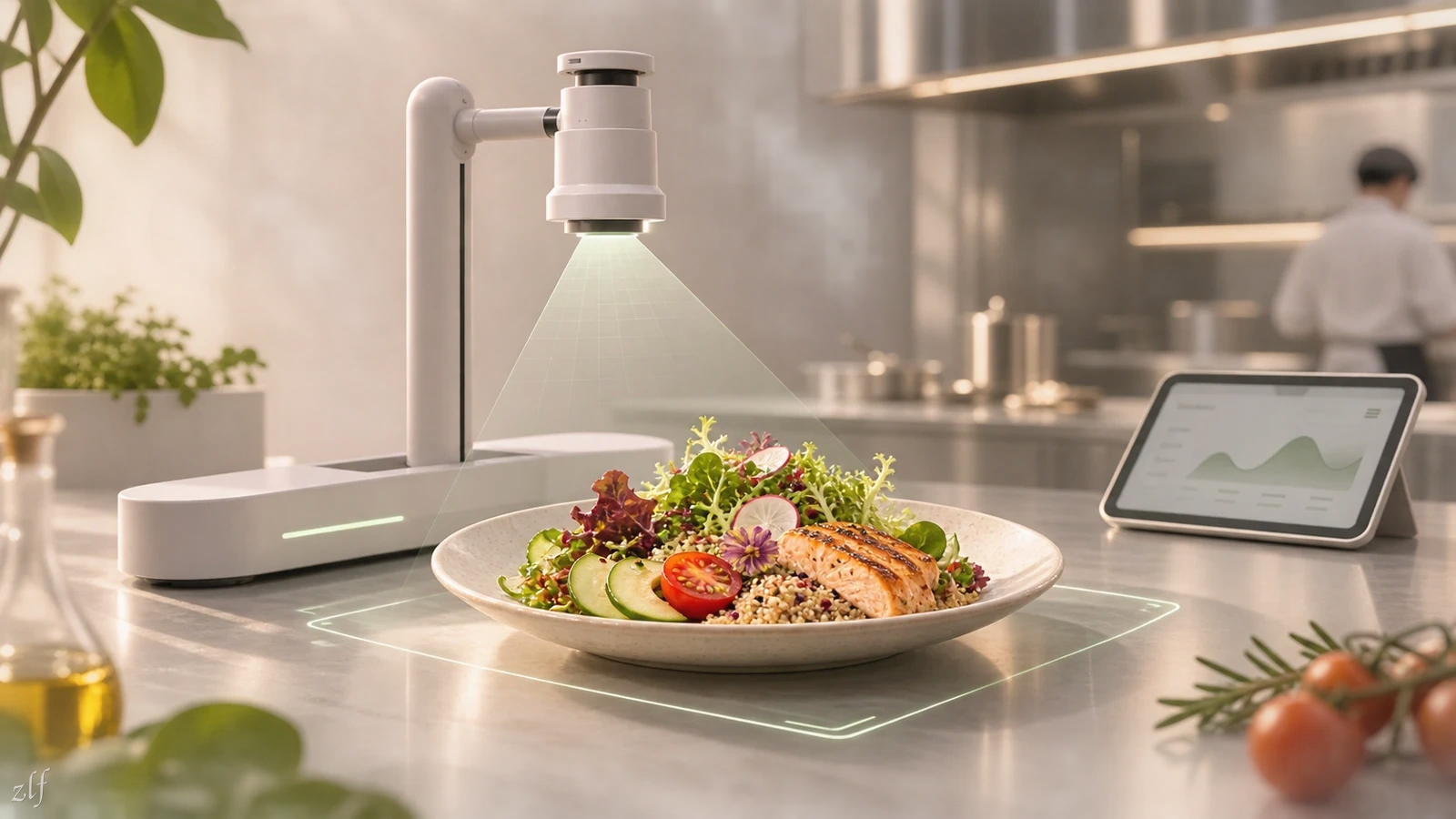
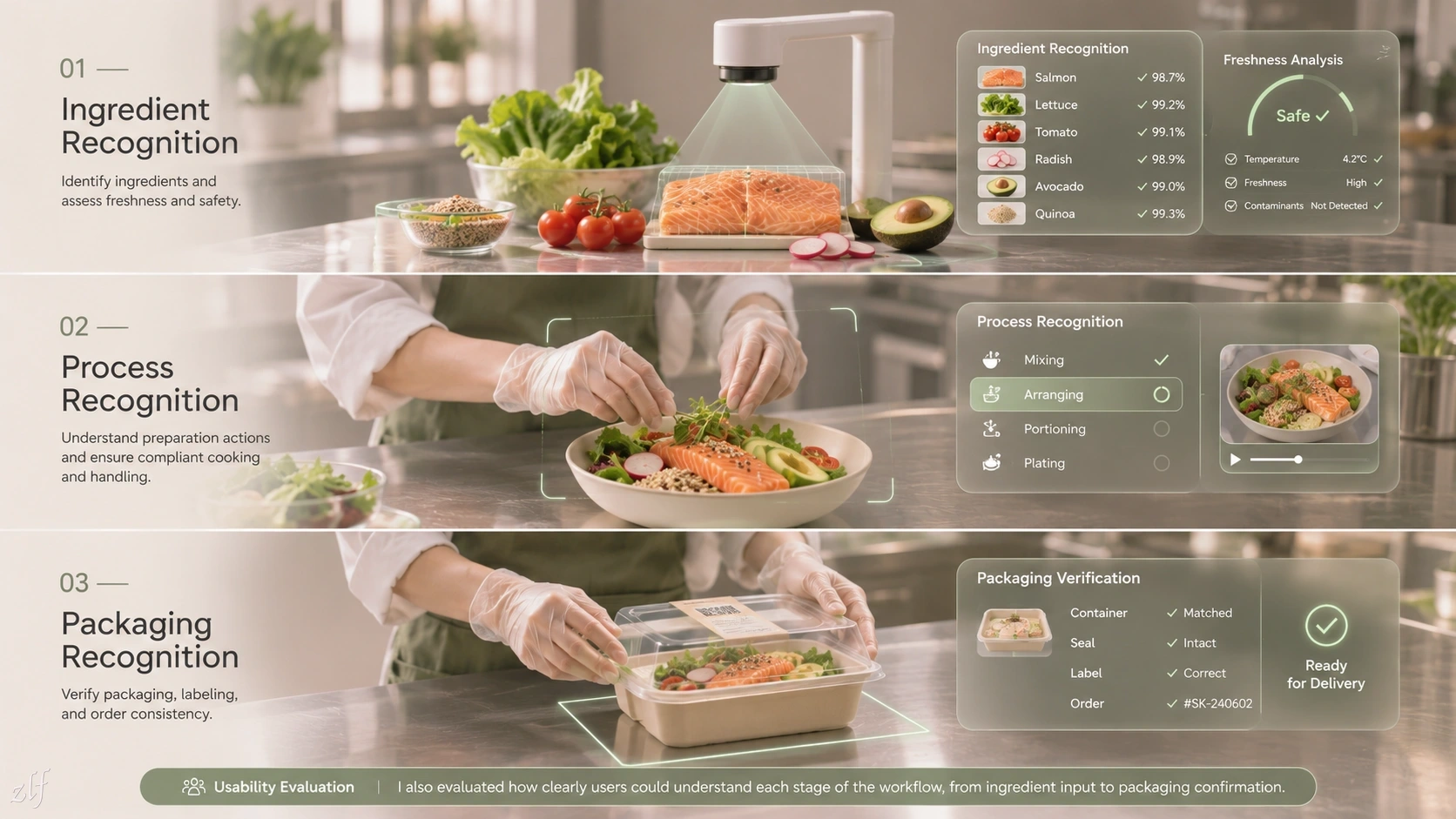
The Journey of a Salad.
From fresh ingredients to your doorstep.
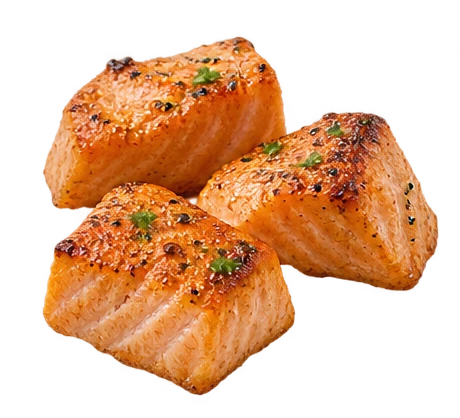
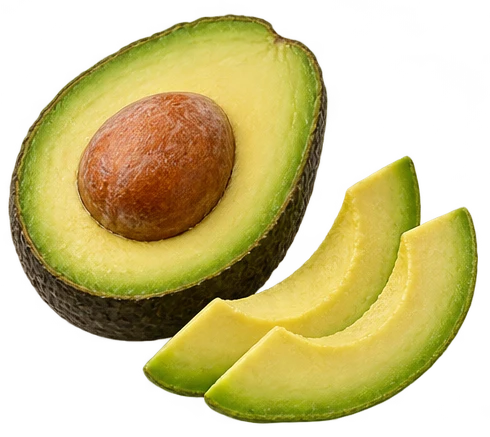
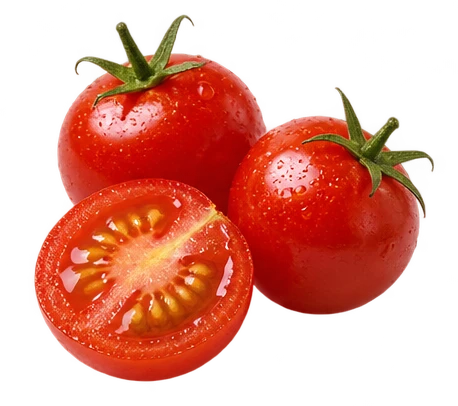
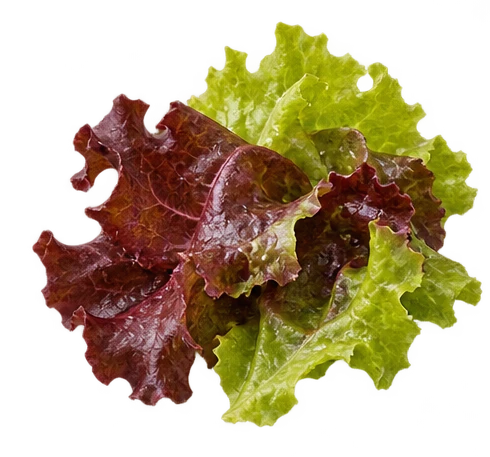
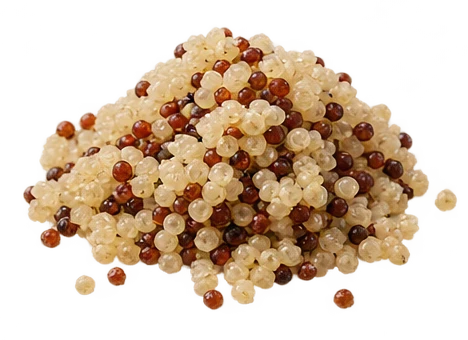
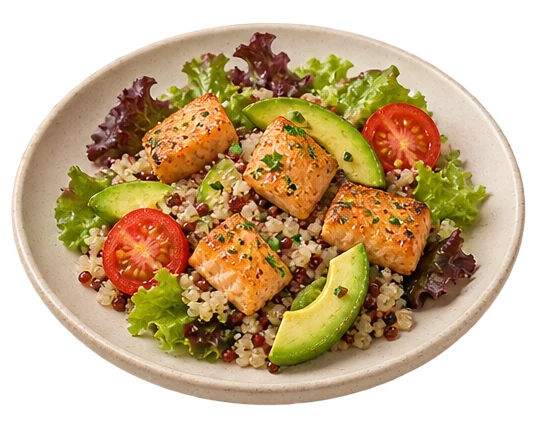
Ingredients
Every ingredient matters.
Salmon · Avocado · Cherry Tomatoes · Leafy Greens · Quinoa
Recognition
Making the invisible visible.
Ingredient identification · Freshness assessment · Storage conditions · Hygiene checkpoints
Preparation
Safety at every step.
Record preparation and flag checkpoints for review.
Inspection
Designed for transparency.
Ingredient records · Preparation records · Quality screening · Inspection status
Packaging
Ready for the journey.
Link a packaging record to the order and its inspection history.
Delivery
From kitchen to doorstep.
Link the courier handoff to a traceable order history.
Transparency at every step.
08 / FoodTrace
Transparency at Every Step.
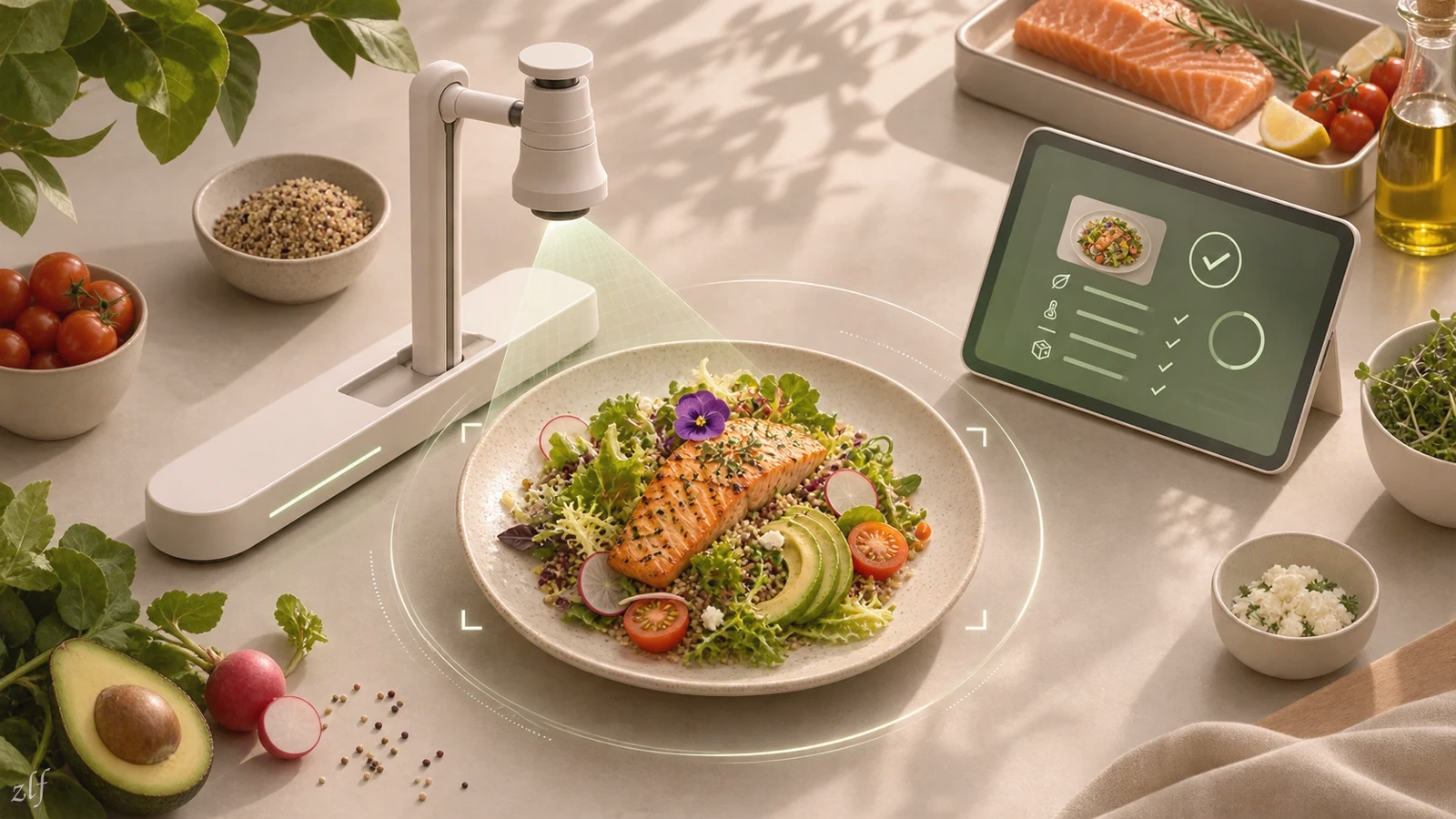
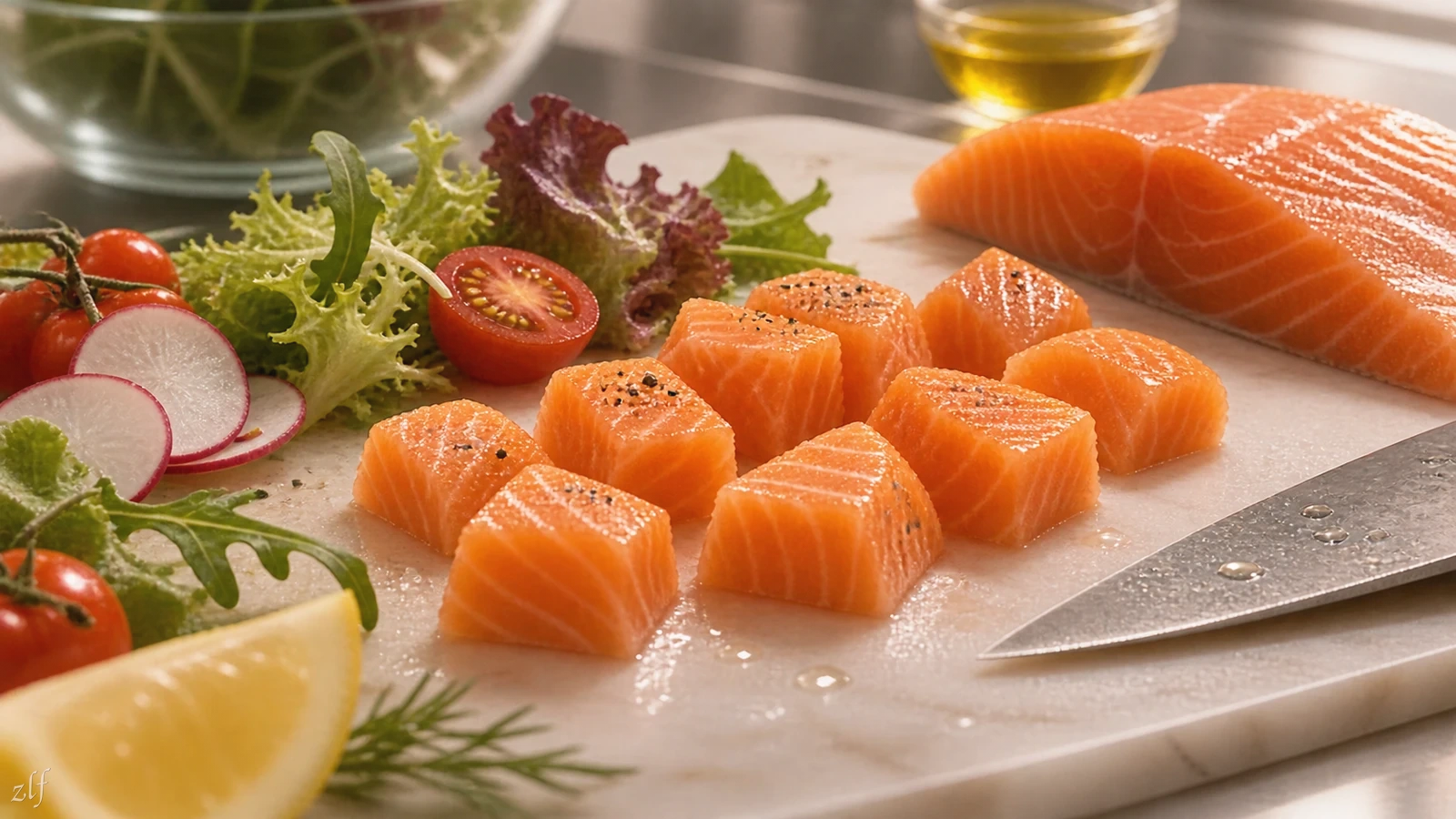
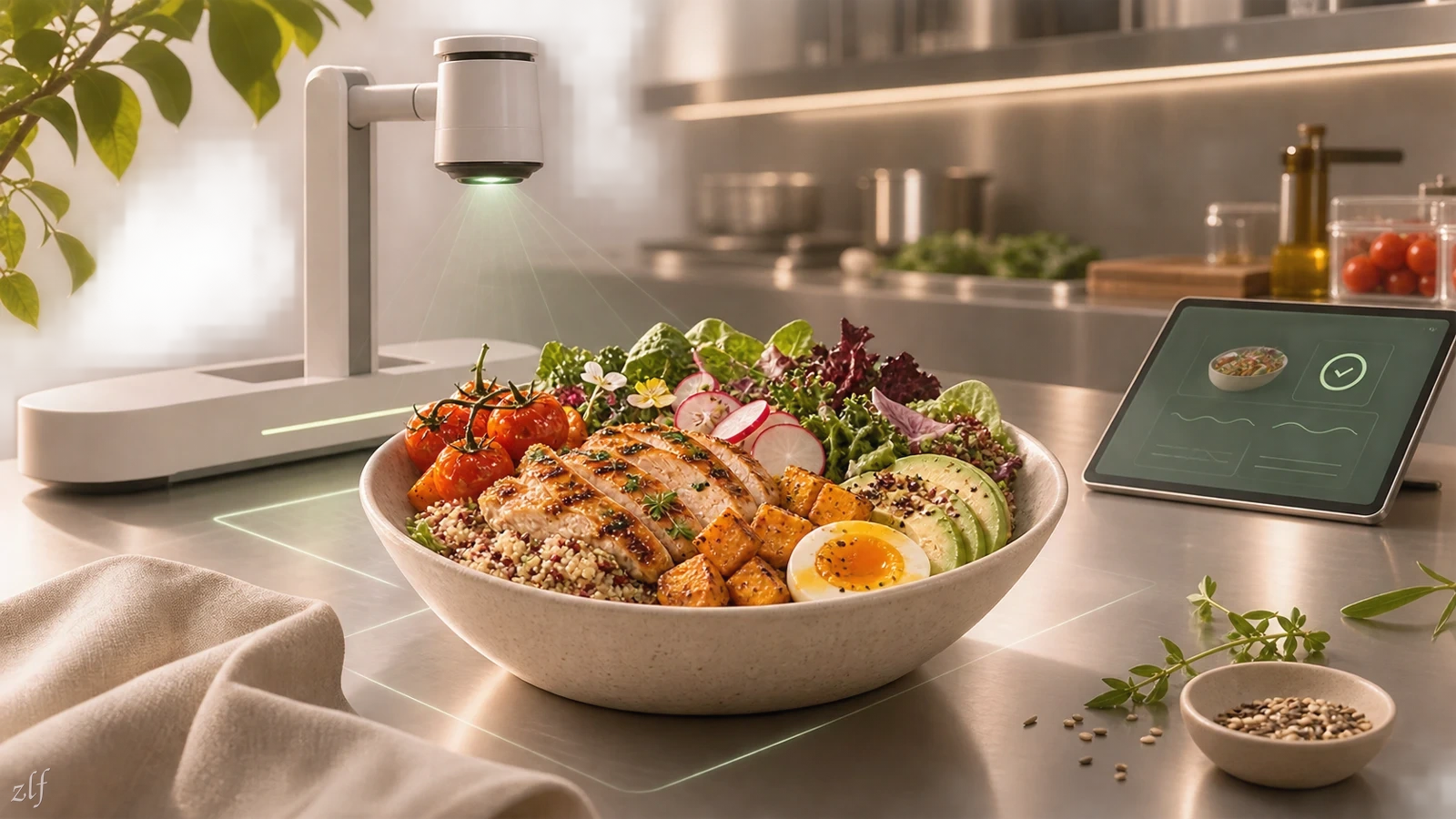
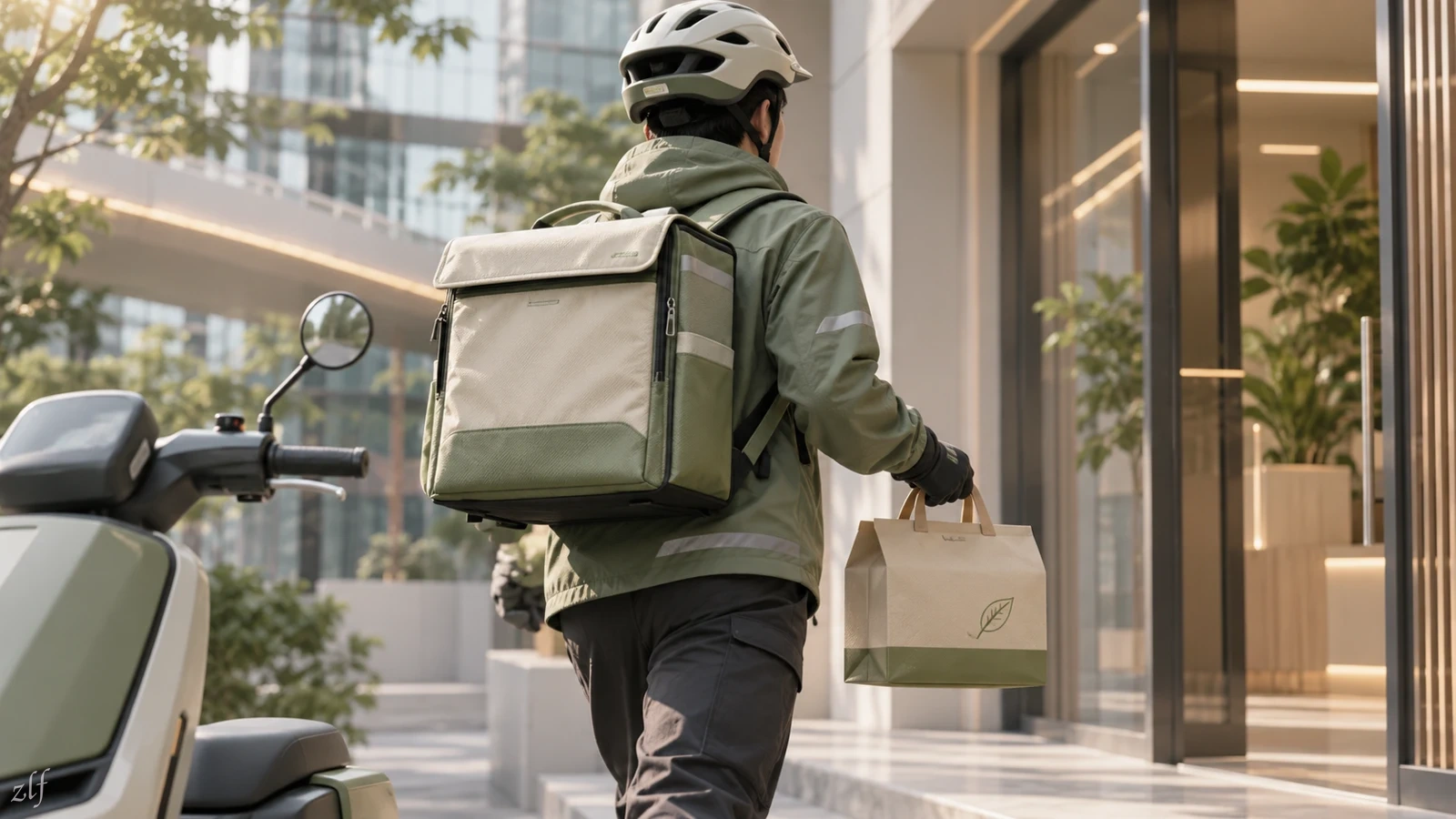
Exploring how visual recognition, inspection technologies and traceable records could support a more transparent food safety workflow.
Research concept and AI-assisted visual refinement. The interface illustrates a proposed workflow; screening and safety outcomes have not been validated.
01
Ingredient Transparency
Making ingredient information visible during preparation.
02
Ingredient Assessment
Supporting ingredient assessment and identifying potential risks.
03
Food Quality Testing
Exploring NIR-assisted screening and laboratory verification. Specific detection capabilities require further validation.
04
Delivery Traceability
Connecting delivery information with safety and inspection records.
09 / FoodTrace
My Thoughts.
Every designer starts somewhere. This was my beginning.
As my first design project, FoodTrace taught me how to discover problems, think systematically, and turn ideas into meaningful solutions.
I started by exploring the root causes of a social issue and asking how design could better serve people's needs. From research and concept development to service design, system architecture, machine learning, and building an interactive physical prototype, I gradually brought together different disciplines to create the kind of human–computer interaction I had always wanted to explore.
It was a long process, but also an incredibly interesting one. There was always something new to learn, something unexpected to discover, and something exciting about seeing an idea slowly come to life.
Looking back, there are certainly things I would design differently today. Yet what I value most is the curiosity and patience behind the entire process.
FoodTrace was where I discovered my passion for connecting people, technology, and design — a curiosity that continues to shape the way I create today.
Original research, system architecture, icon design, and prototype development by Zhilin Fu. Updated visual renderings are AI-assisted refinements.
Next project · Positive Predict